Acne Marks vs. Acne Scars:
Understanding the Difference and How to Address Them
Acne marks vs. acne scars:
What’s the Difference?
The terms “acne marks” and “acne scars” are often used to describe the same thing but are actually distinct from one another, and each has its own implications. While both are completely natural and nothing for you to worry about, if you want to tackle how they look you’ll need to recognise the difference between the two to find the most effective guidance for your skin.
So, when you’re trying to work out the difference between acne marks vs acne scars, what are the key things to look for?

Differentiating between acne marks and acne scars
While acne marks and acne scars share similarities in appearance, the two are in fact very distinct from one another.
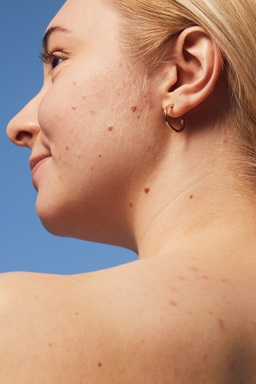
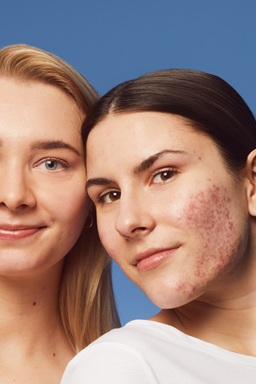
Acne marks are skin discolourations that remain behind after an acne lesion has healed. They’re flat, often appear red or brown, and are the result of increased melanin production in the skin. They form as part of your body’s natural response to inflammation and typically fade over time as the skin renews itself.
By contrast, acne scars – sometimes referred to as pimple scars – result from permanent changes to the skin’s texture and appearance. There are many different varieties, and each typically appears when the body begins healing after more severe acne sores. Unlike acne marks, which are flat and discoloured, acne scars have a rough texture and form visible dips in the skin’s surface.
Because they’re the result of changes to the skin’s Collagen structure, it can be more challenging to reduce how visible they are. How difficult this is also depends on the type of acne scar.
Types of
acne scars
There are six distinct variations of acne scars. So, the first step in your acne-related skincare journey should be correctly identifying the type you have – but what exactly are they?
- Rolling scars:these are the result of fibrous bands below the skin’s surface, which put tension on the epidermis and create a wavy texture.
- Keloid scars:
Unlike other acne scars which form a dip in the skin’s surface, keloid scars are often raised and can grow in size over time. They’re less common than other types of acne scars in this list and are more likely to appear in those with a genetic predisposition.
- Ice pick scars:
extend into the dermis, creating a deeper, v-shaped recess in the skin. They can be described as looking like puncture marks in the skin.
- Boxcar scars:
Characterised by well-defined edges, boxcar scars tend to be shallow depressions, but can extend deeper into the skin.
- Hypertrophic scars:
These are thicker areas of skin that form around the site of an injury or inflammation. Whereas other scar types form due to a change in the skin’s structure, the overproduction of Collagen during the healing process causes hypertrophic scarring.
- Pock marks:
have an uneven, pitted texture but can vary in depth. They’re typically wider than ice pick scars and are often the consequence of inflammatory acne.
Post-acne
Discoloration
The aftermath of acne breakouts can play a significant role in the formation of red, brown, and dark spots on your skin. By understanding this process you can demystify their appearance and learn how to potentially get rid of red marks left by spots.
![Man with acne scars [DAM Asset ID: 869ca692-0f12-4a92-9ab2-ae868f4d65be - needs manual import]](https://assets.beiersdorf.com/-/media/images/b/0/8/2/a9274007438048dfa3c6b60df859eec3-screen.jpg?db=web&ctx=au&mw=384&hash=4900d5f9e2996434a923d6a0d54fbd8a)
Red spots (Erythema):
Caused by the dilation of blood vessels near the skin’s surface, red spots appear soon after a pimple heals. Although not true scars, they do contribute to the overall appearance of post-acne discolouration. Patience is key here, as these spots take time to fade away.
Brown and dark spots:
Similar to PIH, brown and dark spots are the result of excess melanin production. Inflamed skin triggers overactivity of melanocytes, the cells responsible for producing melanin. This excess melanin accumulates, resulting in the formation of brown or dark spots. The intensity of the discolouration can vary, with brown spots being lighter while dark spots form a deeper hue.
By using effective skincare products, targeted treatments, and diligent sun protection, you can help minimise the appearance of those spots/acne marks.
Factors influencing
Healing and Fading of Acne Scars
The journey towards healing and fading acne scars is a complex process, influenced by a variety of factors. From skin type to scar type, and even your individual healing processes, each element plays a role in the timeline and effectiveness of scar resolution.
- Skin type and scar type:
Superficial scars may fade away naturally over time, while deeper scars, such as ice pick or boxcar scars, take longer.
The healing process can also be affected by where the scar sits on your body. It’s all about blood flow and the regeneration of skin cells – nature’s own special effects. - Individual healing processes:Everyone’s body responds differently to scar healing and fading. It’s like a unique story written in your genes, intertwined with your overall health and immune system function. You might experience quicker resolution, while someone else needs a bit more time and intervention. It’s important to remember that everyone’s journey is as unique as their fingerprint.
- Duration of scar fading:Do acne scars vanish on their own? Well, some mild marks and superficial scars may naturally fade away over time, whereas more severe scars may need a greater level of intervention.
The duration of scar fading depends on various factors, such as scar type, depth, and treatment approach. Some scars may show improvement in just a few weeks, while others take months or even years to diminish. The key is to consistently follow your skincare routine and include recommended treatments to speed up the fading process.
Understanding these factors sets the stage for realistic expectations in the scar healing and fading process. Remember, complete scar removal may not always be possible, but significant improvement in how your acne scars look can be achieved with the right strategies and a diligent skincare regimen. If, after 12 months, you notice minimal improvement, have a chat with your dermatologist for further guidance.
Effective
Treatment Options
When it comes to addressing acne marks and scars, there’s a wide range of over-the-counter treatment options available to suit different scar types and your individual preferences.
![Nivea DermaSkin Clear Night Exfoliator [DAM Asset ID: 81852057-85e4-4c03-8071-5038442a968a - needs manual import]](https://assets.beiersdorf.com/-/media/images/a/6/7/b/fd960a9d8915400688ddea23458125d4-print.jpg?db=web&ctx=au&mw=384&hash=3ede2d430c58594250dbea32c3ff99c5)
Over-the-counter products
Several over-the-counter products containing scar-reducing ingredients can be seamlessly integrated into your skincare routine to help reduce acne marks and scars:
- Salicylic acid:
As a beta hydroxy acid (BHA) with exfoliating properties, Salicylic Acid helps unclog pores, reduce inflammation, and can potentially improve the overall appearance of scars.
- Niacinamide:
Niacinamide helps regulate sebum production, reduces inflammation and enhances the skin’s barrier function.
- Alpha hydroxy acids (AHAs):
AHAs, such as Glycolic Acid, promote exfoliation, helping to minimise the appearance of superficial scars and improve skin texture.
- Topical retinoids:
Derived from Vitamin A, Retinoids encourage cell turnover and Collagen production, which may contribute to scars fading over time.
- Vitamin C:
As an antioxidant, Vitamin C brightens the skin and promotes Collagen synthesis, all of which may contribute to scar improvement.
Natural remedies for
Acne Marks and Acne Scars

If you’re keen on a more holistic approach to scar management, natural remedies offer potential benefits. While they may not produce immediate results, these remedies may help gradually fade acne scars and marks naturally. Let’s explore key ingredients and what to keep in mind for effective use.
- Aloe Vera:Known for its soothing and healing properties, Aloe Vera can promote skin regeneration and reduce inflammation. Its gel-like consistency moisturises, helping scars and marks to fade. Aloe Vera can also improve overall skin health thanks to its anti-inflammatory, anti-bacterial, and skin-protecting properties.
- Rosehip Oil:Extracted from wild rose bush seeds, Rosehip Oil is rich in fatty acids and Vitamins. It can help regenerate skin cells, boost Collagen production, and potentially reduce the appearance of scars. The oil’s hydrating properties can enhance skin texture and elasticity.
Curating a skincare regimen and other
preventative measures
Prevention is the first step in protecting your skin against the formation of acne scars and marks. By taking a proactive approach and sticking to a consistent skincare regimen, it’s possible to minimise the risk of scarring and achieve a healthier, more radiant complexion.
![a hand holding a bottle of water [DAM Asset ID: b40e60e6-c0e5-43d2-8353-c3fdedd4df37 - needs manual import]](https://assets.beiersdorf.com/-/media/images/e/8/f/c/0b1e513bad754de9a1ba45a19ab6f1cc-screen.jpg?db=web&ctx=au&rx=482&ry=0&rw=800&rh=1067&mw=384&hash=6c56de261ee2cffbc31450ee32f4f6a1)
Addressing the symptoms of acne promptly may reduce the chances of scarring. Always avoid squeezing or picking at pimples, as this can worsen inflammation, spread bacteria and increase the risk of scarring.
Maintaining a healthy lifestyle that includes a balanced diet, regular exercise, and sufficient sleep can also support overall skin health. Staying hydrated and keeping stress in check may help prevent breakouts too.
By integrating these preventative measures and skincare practices into your daily routine, you can create a shield of protection against acne scars and marks.
Remember, consistency is key – nurturing your skin with care and patience lays the foundation for a clearer and more resilient complexion.
A comprehensive
Skincare Regimen for Acne Marks:
A well-rounded skincare routine can play a crucial role in helping to prevent acne scars and marks while also maintaining overall skin health. Not sure where to start? Here’s a suggested regimen you can try:

1. Gentle cleansing:
Start with a mild, non-comedogenic cleanser (containing ingredients that won’t clog your pores) to remove dirt, oil, and makeup. Cleansing helps prevent clogged pores that can otherwise worsen acne symptoms.
2. Exfoliation:
3. Facial serum:
Targeted treatments often contain higher concentrations of active ingredients to enhance their intended purpose. If you’re dealing with acne marks, it’s a good idea to use a serum that combines ingredients with Salicylic Acid to help achieve a more refined complexion.
![NIVEA Derma Skin Clear Chemical Exfoliator [DAM Asset ID: 58ab314c-f1fc-4ee9-8fee-d9c8d3865497 - needs manual import]](https://assets.beiersdorf.com/-/media/images/3/6/f/1/7ac9839ecdab45a9999305abb16d12b7-screen.jpg?db=web&ctx=au&rx=30&ry=0&rw=900&rh=1200&mw=384&hash=b0ec9258514505fab83f17ffab9770e4)
4. Hydration:
Keeping the skin adequately hydrated is essential for its natural healing processes. If possible, choose a non-comedogenic moisturiser suitable for your skin type to maintain optimal hydration levels.
5. Sunscreen:
Apply a broad-spectrum sunscreen with at least SPF 50 daily, even on cloudy days. Sun protection shields healing skin from UV-induced damage.
Prevention with
NIVEA Derma Skin Clear
Prevention is the first and perhaps most important step in addressing acne marks and scars. It’s key to avoid picking or popping blemishes, as this may worsen their appearance and lead to scarring.
One way to reduce acne symptoms is to use cleansing products that contain Niacinamide and Salicylic Acid – two ingredients that can work deep into the pores to refine overall skin texture. You can find them in the NIVEA Derma Skin Clear range, which has been formulated specifically to help reduce the symptoms of acne.
Acne marks vs. acne scars
In Summary
To achieve clear and radiant skin, it’s important to understand the difference between acne marks and scars. Acne marks are temporary discolourations caused by inflammation, while acne scars are long-lasting textural changes from severe lesions.
Factors like skin type, scar type, and healing capacity influence scar healing and fading, shaping treatment decisions. Dermatological procedures as well as natural remedies like aloe vera and Vitamin C can help address scars. Combining these methods with a customised skincare regimen can prevent scars, promote skin health, and help you achieve a more even-looking complexion.