5 Benefits of
VITAMIN C FOR SKIN
What is
VITAMIN C?
Vitamin C is a beneficial antioxidant in skincare, known for boosting Collagen production, fighting free radicals, brightening your complexion, and reducing signs of ageing. Commonly found in serums, moisturisers, and masks, it helps you achieve a glowing, healthy look and protects your skin from environmental stressors.

5 Vitamin C
BENEFITS FOR SKIN
- 1Brightens skin:
Vitamin C's influence on melanin synthesis could help fade dark spots on your skin whilst preventing new ones from forming. This effect is generally only seen with long-term use of high-concentration products. However, most vitamin C products could lead to a more uniform skin tone and a brighter complexion over time.
- 2Reduces wrinkles:
As a stimulator of Collagen synthesis, Vitamin C helps maintain your skin's structural integrity and elasticity. Increased Collagen production results in smoother, firmer skin, effectively reducing the appearance of fine lines and wrinkles.
- 3Protects the skin's natural barrier:
By protecting your skin against pollutants, Vitamin C also helps prevent damage caused to the skin barrier. As it plays an important role in moisture retention, this protection helps keep your skin hydrated, soft and supple.
- 4Supports skin repair:
Vitamin C could promote faster healing of your skin by supporting its natural repair process. This is particularly useful for blemish-prone skin, helping to fade post-blemish marks and scars more quickly.
Vitamin C
FOR DIFFERENT SKIN TYPES

Sensitive skin
For those with sensitive skin, Vitamin C can be both beneficial and a bit tricky to use. Its topical antioxidant properties help reduce redness and soothe irritation, but high concentrations might cause reactions. It's best to choose products with a lower concentration of Vitamin C or stable and better tolerated derivatives like sodium ascorbyl phosphate or ascorbyl glucoside. Always do a patch test before full application to make sure your skin tolerates it well. With regular use, Vitamin C could help strengthen sensitive skin, making it less reactive and more radiant.
Oily skin and blemished skin
Oily skin and blemished skin may benefit from Vitamin C. In fact, when used in high concentrations it can help reduce the appearance of large pores. Vitamin C's antioxidant properties protect against free radicals, which can contribute to the oxidation of sebum and the clogging of pores that cause blemishes. Lightweight, non-greasy formulas like serums are ideal for oily skin. For blemish-prone skin, opt for non-comedogenic formulas and consider combining them with anti-blemish ingredients such as salicylic acid for best results. Used regularly, vitamin C can help you achieve a brighter, smoother, more balanced complexion.
Whichever vitamin C formula you use, don't assume that it will necessarily offer all the potential benefits of vitamin C, as each formula has its own specific requirements. In fact, each formula meets specific needs. Always check the product packaging to find out about its use and properties.
Dry skin
Vitamin C could also be used for dry skin, as its antioxidant properties help maintain the integrity of the skin barrier and therefore promote water retention. Vitamin C formulations with moisturising ingredients like Hyaluronic Acid or Glycerin may also help replenish moisture and give you plumper-looking skin. Regular application of Vitamin C could enhance skin texture, giving your skin a fresh new radiance.
Vitamin C and
OTHER INGREDIENTS
- 1Vitamin C + Hyaluronic Acid:
Hyaluronic Acid helps retain moisture in your skin, complementing Vitamin C's anti-ageing effects while keeping your skin hydrated and plump.Â
- 2Vitamin C + Vitamin E:
Vitamin EÂ is another potent antioxidant that works together with Vitamin C to boost its antioxidant properties, providing enhanced protection against free radicals and promoting skin repair.Â
- 3Vitamin C + Retinol:
Retinol (Vitamin A) and Vitamin C together promote Collagen production, improve skin texture, and reduce signs of ageing. They should be introduced gradually to avoid irritation.Â
- 4Vitamin C + Coenzyme Q10:
Helps to energise skin cells and to defend against environmental damage. When paired with Vitamin C, it helps amplify antioxidant protection, improves skin elasticity, and enhances your skin's overall glow.
VITAMIN C
Benefits:
Vitamin C promotes a radiant complexion, brightens skin tone, and boosts Collagen.
Application:
You can apply it via serums, moisturisers, and masks for optimal results.
Uses:
Used to boost Collagen production, diminish fine lines and wrinkles, and promote a more even-looking complexion.
Special features:
Vitamin C shields your skin from free radicals, offering defence against environmental stressors.
NIVEA skincare
ROUTINE WITH VITAMIN C FOR FACE
Created for anyone seeking a vibrant and youthful-looking complexion, this face care routine with Vitamin C is great for addressing dullness, fatigue, and signs of ageing. It uses the antioxidant power of Vitamin C to enhance your skin's radiance and protect against environmental stressors.
2. Targeted treatment:
To ease signs of fatigue and dullness around your eye area, incorporate products that contain Vitamin C and Vitamin E. These may help firm the eye contour and provide hydration, giving your eyes a refreshed and youthful appearance.

3. Serum:
Serums are essential in skincare as they target specific skin concerns such as signs of ageing, dehydration, or an uneven complexion. Depending on your skin's needs, you can choose from a variety of NIVEA serums to enhance your skincare routine:
Alternatives without Vitamin C:
For dry skin prone to dehydration: the NIVEA Cellular Expert Filler Hyaluronic Acid Serum helps replenish moisture and improve skin suppleness, leaving your skin feeling smoother, softer, and refreshed.
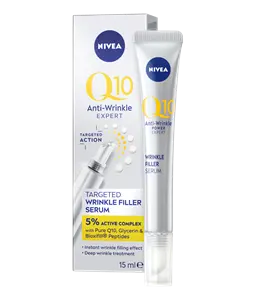
For loss of elasticity and facial contours: the NIVEA Q10 Anti-Wrinkle Collagen Pro 3in1 Repairing Serum repairs the appearance of deep wrinkles, firms facial contours & visibly improves skin elasticity.
For daily protection and care: the NIVEA Q10 Anti-Wrinkle Expert Daily UV Fluid SPF50 with PURE Q10 and broad spectrum UVA/UVB, protects, prevents and reduces the appearance of wrinkles. Its lightweight texture absorbs easily, making it suitable for everyday use.
Whatever serum you use, apply it evenly to your face and allow it to absorb completely before applying any subsequent treatments.
Continue the routine by moisturising your face to maintain the skin barrier and keep it hydrated.
Finish your daytime skincare routine with a broad-spectrum sunscreen to protect your skin from harmful UV rays. Even if your moisturiser contains SPF, you may need to apply a separate sun cream to ensure adequate protection, depending on your exposure to the sun. And don't forget to reapply regularly to maintain your level of protection.

NIVEA Q10 firming and
ENERGISING BODY SERUM LOTION
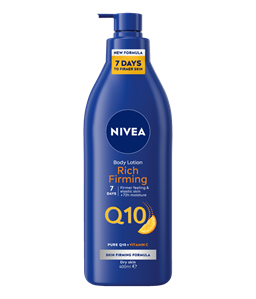
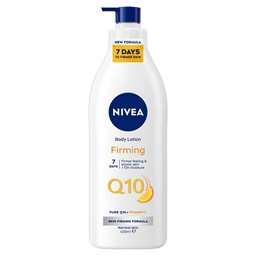
NIVEA Firming + Energising Q10 is the perfect addition to your body care routine. Formulated with Vitamin C and Hyaluronic Acid and our highest concentration of Coenzyme Q10 in the NIVEA Body range, it helps firm and improve skin elasticity from as early as 7 days, while providing up to 72 hours of hydration. Its light texture gently melts into your skin's upper layers, leaving it feeling energised, beautiful and radiantly healthy.

SUMMARY
Vitamin C enhances Collagen production, maintains your skin's firmness, and reduces wrinkles. Its antioxidant effects combat free radicals, protect against environmental stressors, and brighten your skin. What's more, in high concentrations, it can help reduce brown spots, helping to brighten your complexion. Suitable for different skin types, vitamin C supports skin repair, making it a versatile and essential skincare ingredient to add to your routine.
FAQs
Yes, Vitamin C brightens skin by promoting a more even skin tone. Used in high doses over long periods, it can also help reduce dark spots.
Yes, as it offers protection against free radicals produced by UV rays and environmental pollutants and can also help minimise the appearance of wrinkles by stimulating Collagen production.
L-ascorbic Acid is the most studied and the most active form of Vitamin C for skincare, due to its ability to absorb into the skin effectively. However, it is not very stable and requires an acid pH of less than 3.5 to maintain its stability, making it more difficult to use on sensitive skin. For this reason, many products use derivatives that are more stable and better tolerated, such as ascorbyl glucoside or sodium ascorbyl phosphate.
Products containing vitamin C can be used both morning and evening: in the morning, to benefit from its antioxidant protection against daytime environmental stressors like UV rays and pollution; and in the evening, to support your skin's natural regeneration during the night and for its anti-ageing effect.
Yes, Vitamin C serum can typically be used alongside other skincare products like moisturisers and sunscreen. However, as vitamin C and its derivatives have fairly limited stability, you should avoid mixing it directly with other products. It's best to apply it after cleansing and before moisturising for optimal absorption. Always wait until the serum has been completely absorbed before applying the next skincare product.
Results from Vitamin C serum can vary depending on the formula and objective, but many people notice brighter, more even-toned skin within a few weeks of regular use.
No, Vitamin C serum cannot replace sunscreen. While it provides some antioxidant protection against environmental damage, including UV rays, it does not provide sufficient protection on its own. Always use a broad-spectrum sunscreen with SPF 30 or higher during the day in case of sun exposure.
Vitamin C serums are typically lighter in texture and designed to deliver a higher concentration of Vitamin C directly to the skin. Creams may contain lower concentrations and are often formulated with additional moisturising ingredients.
Vitamin C helps fight free radicals, supports Collagen production and supports skin regeneration.