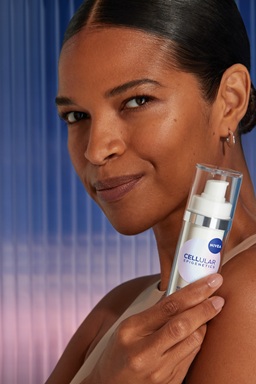
Collagen for Skin:
WHAT IS IT, TYPES AND BENEFITS
Collagen plays a key role in keeping skin firm, smooth, and resilient, both on the face and body. As natural production slows with age, supporting it through healthy lifestyle choices, balanced nutrition, skincare that includes sun protection can help maintain skin’s structure, elasticity, and hydration.
By supporting the skin’s natural collagen production and helping to preserve existing collagen, these practices can help reduce the visible signs of skin ageing, smooth the appearance of facial wrinkles, improve skin elasticity across the face and body, and leave the skin looking more radiant, plump, and resilient over time.
What is collagen and
WHAT DOES IT DO?
Collagen is the most common protein in your body – think of it as a strong, supportive glue that holds everything together. You’ll find it in connective tissues such as your skin, bones, tendons, ligaments, and cartilage, where it provides structure, firmness, and resilience.
Collagen is built from Amino Acids that link into long, twisted strands. Three chains are bound together to form what is known as a ‘triple helix’. These are then assembled into collagen fibres, which give your skin its supporting structure and help it stay smooth and elastic.
In the skin, collagen is found in the dermis (the middle layer). As you get older, your body produces less collagen, which is why skin can start to feel less firm over time.
Types of
COLLAGEN
There are 28 different types of collagen in your body, each with unique roles in supporting skin, joints, and overall health. Of these, five key types are the most abundant and well-studied, playing essential roles in skin structure, elasticity, and resilience:
What type of
COLLAGEN FOR SKIN?
When it comes to your skin, Types I and III are the most important, as they are directly involved in repairing skin, and helping it become more elastic. Many skincare products and supplements focus on these types because they support your skin's structure and may help to reduce the appearance of fine lines and wrinkles.
Where is collagen found?
- Natural production: Your body produces collagen on its own, but levels naturally decline with age. This happens because the cells that create collagen become less active over time, and environmental factors like sun exposure and oxidative stress can accelerate its breakdown.
- Animal-based foods: Bone broth, chicken, fish, and eggs are rich in collagen and its Amino Acid building blocks. These could be partially absorbed by your body in the form of peptides or amino acids, which can then be used to reform collagen in the body if the right conditions are met.
- Plant-based foods: Beans, leafy greens, and foods high in Vitamin C don’t contain collagen directly but help your body make it naturally.
- Skincare products: Creams and serums generally do not contain collagen either, but may contain ingredients that promote collagen production in your skin.

Forms of collagen
FOR THE SKIN
Collagen for the skin comes in different forms. Supplements usually contain Hydrolysed collagen (also called collagen Peptides), which are broken down into smaller pieces that your body can use more easily. In fact, whole collagen is difficult for the body to absorb.
Skincare products don’t deliver collagen directly into the deeper layers of your skin because the collagen molecules are too large to penetrate fully. Instead, topical creams and serums often contain ingredients such as Peptides, Vitamin C, Bakuchiol, or Retinol, which help stimulate your skin's own collagen production or support its structure.
4 Collagen benefits
FOR SKIN
Collagen plays a vital role in maintaining firm, smooth-looking, and resilient skin. Supporting collagen production can help reduce the appearance of fine lines and wrinkles while keeping skin more hydrated and healthy-looking.16

- Supports firmness and elasticity:
Collagen provides structure to your skin, helping it stay firm, smooth, and resilient.
- Reduces signs of ageing:
As natural collagen production slows with age, supporting it can help minimise sagging, fine lines, and wrinkles.
- Boosts hydration:
Collagen helps your skin retain moisture, which helps keep it plump, soft, and well-hydrated.
- Strengthens and protects skin:
Working alongside proteins like elastin, collagen helps maintain your skin's strength, flexibility, and overall health, while also supporting its repair process.
Collagen for the skin?
Benefits of collagen: Collagen helps keep your skin firm, smooth, and elastic while helping to reduce the appearance of fine lines and wrinkles.
How to increase collagen: Collagen can be supported through skincare products, supplements, and a balanced diet rich in protein and Vitamin C.
Uses of collagen: Collagen is used in your body to improve skin structure, maintain hydration, and support hair, nail, and joint health.
Use of collagen boosters in skincare products: Many NIVEA products include ingredients like Peptides, and Hyaluronic Acid to help stimulate your skin's own collagen production and provide long-lasting hydration.
5 Causes of collagen
LOSS IN SKIN
Collagen loss in the skin can lead to sagging, fine lines, and wrinkles. Understanding the main causes, such as ageing, sun exposure, lifestyle factors, and nutrition, can help you take steps to maintain firmer, smoother skin.¹⁷
Natural collagen production starts to slow down in your mid-20s, leading to reduced firmness and elasticity over time. This decline is caused by a natural slowdown in the activity of collagen-producing cells, and over time, your skin becomes thinner and less resilient.
UV rays can break down collagen in your skin, contributing to wrinkles and sagging. This is because prolonged sun exposure generates free radicals, which can damage collagen fibres and impair your skin's ability to repair itself. Even short, repeated exposure over time can weaken collagen and elastin, making skin more prone to premature ageing.


Chemicals in cigarettes can damage collagen and elastin, weakening skin structure. Smoking also reduces blood flow to your skin, limiting oxygen and nutrients needed for collagen production.
A lack of protein, Vitamin C, and other nutrients can make it harder for your body to produce collagen. Without sufficient nutrients, the building blocks for collagen synthesis are limited, and your skin may lose its firmness and resilience more quickly. Diets high in sugar or processed foods can also promote glycation, a process that can damage collagen fibres.
Chronic stress and not enough sleep can interfere with skin repair and collagen production. Stress increases Cortisol levels, which can break down collagen and weaken your skin barrier. Lack of restorative sleep reduces your skin's natural repair processes, meaning collagen regeneration is less effective over time.
Collagen
against wrinkles
As you get older, natural collagen levels in your skin decline, which can make it less firm and contribute to the appearance of fine lines and wrinkles. Supporting collagen through skincare and healthy diet choices can help maintain your skin's structure, keeping it smoother, plumper, and more resilient.
While it will not completely prevent wrinkles from forming, products and ingredients that stimulate collagen production, such as Peptides and Vitamin C, can help your skin look firmer and more youthful.
Skincare routine to
HELP BOOST FACIAL COLLAGEN
Switching up your skincare routine is an easy way to help stimulate collagen production in your skin. A simple, consistent routine with the right products can help maintain firmness, smoothness, and hydration. Here is a simple routine to help boost the natural effect of collagen.
Cleansing is an important first step in any skincare routine as it helps to clear away dirt, oil, and impurities from your skin's surface. It also helps other products work more effectively by improving their absorption into the skin.
NIVEA offers a range of gentle yet effective cleansers to suit all skin types, from nourishing gels to refreshing Micellar Waters. Each is designed to lift away impurities while caring for your skin's natural barrier, so you can choose the texture and formula that feels best for you.
The NIVEA Q10 Anti-Wrinkle Collagen Pro 3in1 Repairing Serum repairs the appearance of deep wrinkles, firms facial contours & visibly improves skin elasticity. Formulated with Pure Q10, Collagen Peptides & Ceramide.


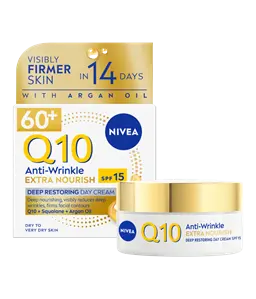
After your serum, the Q10 Anti-Wrinkle Extra Nourish Restoring Day Cream helps lock in moisture while boosting collagen production. Enriched Pure Q10, Squalane and Argan Oil, specially designed to meet the needs of dry to very dry skin in mind. For 24hr intense hydration, measurably firmer skin for 91% of women in 2 weeks and visibly reduces deep wrinkles in 4 weeks.
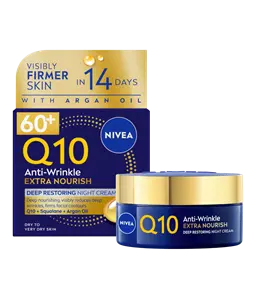
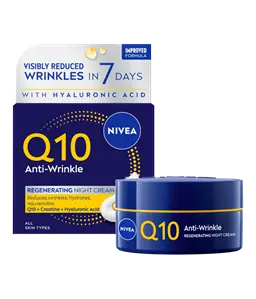
Night is when your skin works hardest to repair and regenerate, making it the perfect time to use a rich, nourishing cream. The NIVEA Q10 Anti-Wrinkle Extra Nourish Deep Restoring Night Cream supports collagen and helps to leave your skin looking and feeling renewed by morning.
How to boost
SKIN COLLAGEN FOR THE BODY

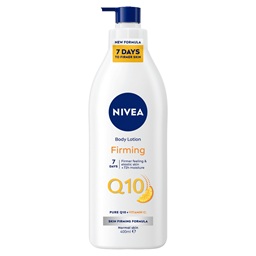
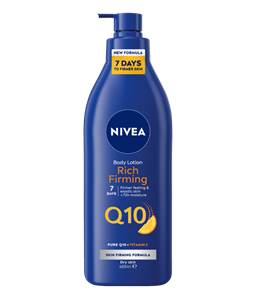
The NIVEA Firming Body Lotion with Q10 and Vitamin C has been enriched with two powerful antioxidants - Q10 and Vitamin C. The quick absorbing lotion intensively moisturises the skin for 72 hours, for noticeably firmer skin and improving skin elasticity in just 7 days.
SUMMARY
Collagen plays a key role in keeping your skin firm, smooth, and resilient, both on your face and body. As natural collagen production slows with age, supporting it with a consistent skincare routine and healthy lifestyle habits can help maintain your skin's elasticity and youthful appearance. From targeted serums to Day and Night creams, there are simple ways to help support collagen production and keep your skin looking and feeling its best every day.