How to Reduce Nasolabial Folds:
10 Causes & 6 Care Options
What are
Nasolabial Folds?
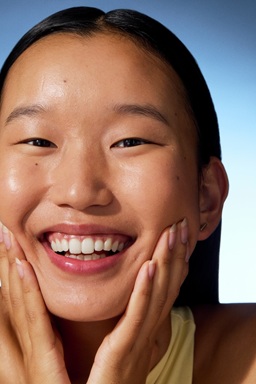
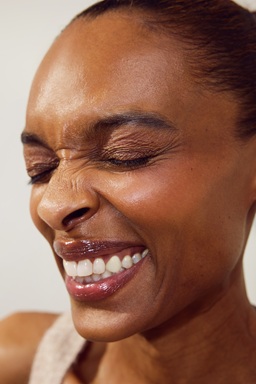
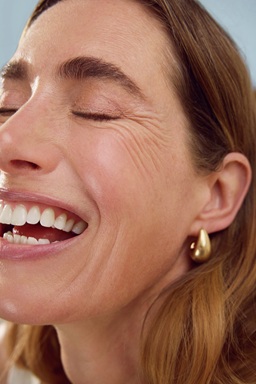
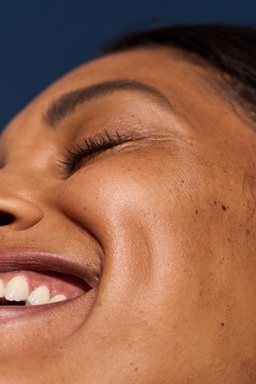
Also known as smile or laugh lines, nasolabial folds are creases that run from the sides of your nose diagonally downwards to the corners of your mouth. These smile lines are a type of dynamic wrinkle, meaning they look more prominent while you're pulling facial expressions. They appear with age as Collagen production slows, but can also be deepened by sun-induced damage and other stressors.
As the name suggests, smile and laugh wrinkles signify a life full of joy, so they really are something to celebrate. If a more youthful complexion is your goal though, there are a number of methods you can try to get rid of, or at least reduce, nasolabial folds. These range from cosmetic procedures to massages and topical creams you can easily work into your daily routine.
What causes
Nasolabial Folds?
The underlying cause of smile lines appearing is a decrease in the amount of Collagen and Elastin present in your skin, leading to creasing and folding. Although this happens naturally with age, deeper nasolabial folds can be caused by UV damage, smoking and weight changes.
Recap: Why is Collagen important for your skin?
Collagen is a protein that your body naturally produces; it provides structure, strength and support throughout your body. Abundant levels are what keep skin feeling firm, youthful and supple.
The following are all causes or contributors to the appearance of laugh lines:

1) Age
From as early as your 20s, Collagen levels can reduce by 1% each year. Lower levels of Collagen lead to wrinkling and sagging skin. Your facial structure also changes with age as once high cheekbones begin to flatten, leading to nasolabial folds.
2) Sun damage (Photoaging)
When UV rays penetrate your skin they disturb processes important for regeneration and repair. In the short term, sun damage can cause sunburn; long term it weakens connective tissue, leading to the appearance of wrinkles, lines and dark spots.
3) Smoking
Both the nicotine and thousands of other harmful substances in smoke can harm your skin due to oxidative stress that interferes with Collagen formation. Studies have shown that skin in nasolabial folds is thicker in smokers than in non-smokers. Facial expressions you make while smoking can also contribute to smile lines.
4) Changes in weight
It's common to experience excess skin after weight loss, which can sag and accentuate the appearance of facial lines. Whereas weight gain can cause the cheeks to grow in size, also increasing the appearance of laugh lines.
5) Dehydrated skin
Dehydrated skin is different to dry skin: it refers to a lack of water as opposed to a lack of natural oils. One of the characteristics of dehydrated skin is a sunken or shadowy complexion, causing wrinkles to look more defined.
6) Genetics
The amount of Collagen and Elastin you produce is influenced by your genetic make-up. If your parents had prominent nasolabial folds, chances are you'll also get them.
7) High sugar diet
As much as you might enjoy a sweet treat, unfortunately sugar breaks down both Collagen and Elastin – leading to laugh lines becoming more prominent. This doesn't mean you need to stop enjoying delicious cake, but it is worth trying to limit the amount of sugar in your diet overall.
8) Repetitive facial expressions
To begin with, nasolabial folds may only appear as dynamic wrinkles when you laugh or smile. Over time these repetitive expressions can cause the dynamic wrinkles to become static as skin loses its ability to snap back into place. Think of these as a permanent reminder of the good times!
9) Pollution
Air pollution such as smog and car fumes can cause free-radical damage to your skin, disrupting its defensive barrier. One effect of this is accelerated skin ageing, leading to nasolabial folds.
10) Sleep deprivation
Skin enters its natural regeneration and repair process as you sleep, rebuilding its defensive barrier and producing Collagen. Without enough beauty sleep, your skin has a harder time staying plump and firm.

To begin with, nasolabial folds may only appear as dynamic wrinkles when you laugh or smile.
How to get rid of
Smile Lines
Here's how you can help reduce laugh lines:
Can you prevent
Nasolabial Folds Forming?
Unfortunately the answer here is no – they're a natural part of ageing and even children have them when they laugh or smile. There are things you can do to help stop them from deepening though, which generally means avoiding the main causes.
To try and reduce the deepening of smile lines, you can:
1) Avoid smoking
2) Apply SPF every day
3) Eat a healthy diet
4) Get plenty of exercise
5) Have a personalised skincare routine that you stick to
6) Get 7–9 hours' sleep each night
7) Keep hydrated

Muscles in your face can be toned just like elsewhere on your body, helping you better control expressions.
To reduce nasolabial folds naturally, you can give them a massage every day. Massaging aims to improve skin structure and help prevent sagging. Here are a few tips for carrying out the massage:
- Using your knuckles, swipe downwards from your cheekbones to your chin and back
- Repeat this process approximately 20 times on each side of your face
- Apply a light amount of pressure
- Repeat every day as part of your skincare routine
Muscles in your face can be toned just like elsewhere on your body, helping you better control expressions. When repeated over time, you may see a reduction in smile lines. You can try the following every day without risking any harm:
- Push your lips upwards as though you're trying to kiss the sky and hold for 15–20 seconds. Repeat 5 times.
- Pull the corners of your mouth apart with your index fingers whilst contracting your facial muscles in slight resistance. Hold for 2–3 seconds and repeat 30 times.
- Pout your lips whilst pulling the corners of your mouth out. Hold for 15 seconds and repeat 5 times.
- Gently lift your cheekbones using the palms of your hands whilst pouting your lips in a kissing motion. Hold for 20 seconds and repeat 5 times.

How to reduce
Nasolabial Folds For Men
NIVEA MEN Anti-Age Hyaluron products have been formulated with Hyaluronic Acid to keep skin hydrated while reducing signs of ageing. Regular use of these products over time will help to plump, firm and smooth skin, visibly reducing deep wrinkles and strengthening its elasticity.
Further Treatment for
Nasolabial Folds

Smile lines appear at any age as a dynamic wrinkle, however they begin to look more static between the ages of 25–30.
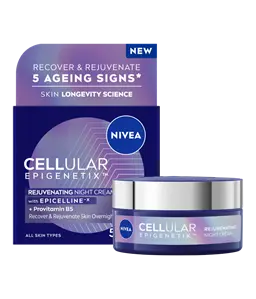
The Cellular Expert Filler ranges offer some of NIVEA's most efficacious anti-age care. By combining Hyaluronic Acid with other superior anti-age actives, these products can help improve the firmness of your skin and reduce the appearance of fine lines and wrinkles.
FAQs
If you still have questions about smile lines, here are a few more common questions and answers on the topic: